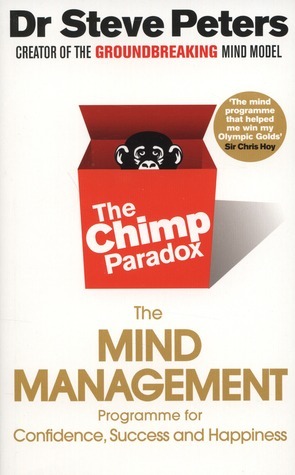
The Chimp Paradox: How Our Impulses and Emotions Can Determine Success and Happiness and How We Can Control Them
ISBN: 9780399163593
Date read: 2023-12-14
How strongly I recommend it: 7.5/10
Get the book or see my list of books
My notes
This section is not written to offend but is based on physical and physiological differences found in the brains of men and women. For example, in men the right amygdala (an emotional centre in the brain) has more right-sided brain connections. Whereas in women the left amygdala has more left-sided brain connections. This helps us to understand where a lot of our emotions come from. It is also to help a significant number of people to appreciate that many of the emotional features within themselves that they may not like are not coming from them but being imposed on them by their Chimp.
If we think of the purpose of the female and male in the jungle it then becomes apparent why specific drives and instincts need different emphases.
Sense of purpose
Humans work best when they have a sense of purpose. It doesn’t seem to matter what it is, as long as there is one! Without a sense of purpose the Human lacks direction and meaning to life.
Key Point
The golden rule is that whenever have you feelings, thoughts or behaviours that you do not want or welcome, then you are being hijacked by your Chimp
The very simple question, therefore, is to begin with ‘Do I want...’ and then finish the sentence. For example: ‘Do I want these feelings?’ or ‘Do I want these thoughts?’ or ‘Do I want to be behaving this way?’ If the answer is ‘no’ then you are in Chimp mode and if the answer is ‘yes’ then you are in Human mode.
Key Point
Remember that Chimps like to go on how they feel to decide on future actions, whereas Humans tend to go on what needs to be done and also how they will feel at the end of the day when they look back on how they used their time. These are two very different approaches.
Suppose you have set off too late to get to the train station and you could miss the train. You have taken a taxi to try to get there as quickly as you can. The taxi driver drives sensibly and takes his time at junctions. You are sitting in the back of the taxi watching this. The Human in you will be saying, ‘The taxi driver is driving sensibly, if I don’t get there on time it is nobody’s fault but my own. I am the one who left it too late and I will have to deal with the consequences.’ So the Human relaxes and says, ‘It’s not the end of the world.’
The Chimp, however, is having none of this. It gets very angry when the taxi driver slows down at the junctions and starts to criticise what is happening and may start making comments. It may even go as far as getting annoyed with the taxi driver and blaming him.
Chimps are like children in that they look for external praise, whereas Humans are like adults and use internal praise and assess themselves. Of course, Humans can enjoy recognition and praise but they don’t generally look for it.
Summary key points
‘Do I want...?’ is the question to ask in order to recognise if your Chimp is hijacking you. If the answer is ‘no’ then you are being hijacked.
You are always responsible for your Chimp.
The Chimp is five times stronger than you are.
Nurture your Chimp before you try to manage it.
Manage your Chimp, don’t try to control it.
There are three common ways to manage your Chimp: Exercise, Box and Bananas
The three parts to assertiveness are:
- Say to the person what you don’t want, using the word ‘I’.
- Say to them how it is making you feel.
- Say to them what you do want, using the word ‘I’.
Working on your body language, intonation, use of words and ambience will help to significantly improve the effectiveness of your communication with others.
One imaginative way of dealing with stress is to use a time machine. If you are worried or stressed about something, imagine you are going forward in a time machine to ten years ahead from now and you are looking back at the current situation. Ask yourself how you would have liked to have acted, and what you would have liked to have said. Ask yourself if getting stressed about the situation helped? Having established this in your mind you can now return to the current time and act in the way you want to.
Beating yourself up and guilt
Never beat yourself up if you handle stress poorly. This is a useless and damaging bad habit. As a bad habit is just a Gremlin we can remove it. Try smiling, relaxing and coming back with enthusiasm. You can only do your best, so accept it. Beating yourself up and feeling guilty are two very useless and destructive Gremlins. They never have anything constructive to offer. Remember, if you are not getting it right then it is a hijack by the Chimp. It is not you failing!
- Relaxing
- Resting
- Sleeping
Sadly, most of us neglect all three levels. This is all about getting the work and play balance right. Your mind and body need to have time out in order to recover from the day-to-day stress that life brings. If you are going to look after yourself then this is a priority.
Relaxing is about taking a few minutes out of your day to wind down and take a breather. Resting is about stopping for a significant period of time during the day, typically the evening to escape work and stress, and to completely unwind.
Sleep speaks for itself.
Motivation versus commitment Motivation is Chimp-driven. It is a feeling based on emotion. Motivation generally happens when there is a great reward to gain or when you are suffering so badly that you want things to change. Motivation is helpful to drive us on but it is not essential to success. It is unrealistic to expect to ‘feel motivated’ every day, no matter what you are doing. The problem with motivation is that it works on feelings from the Chimp and these can shift very quickly. Commitment, on the other hand, comes from the Human and does not depend on feelings. Commitment means following a plan even if you don’t feel like it that day. For example, a surgeon can’t say halfway through an operation, ‘Do you know I just don’t feel motivated to finish this, so I’ll stop now!’ Motivation doesn’t matter; it is commitment that will finish the operation.